
Four myths about custom energy incentives — debunked.

Most energy upgrades don’t fit neatly into a standard incentive category.
That’s exactly why custom incentives exist — to support projects like process improvements, system optimization and equipment upgrades that are not covered by our prescriptive incentives.
Still, many facility managers may assume custom incentives are complicated, time-consuming or hard to qualify for.
The reality is much more straightforward. Here are four common misconceptions — and what actually happens when you explore custom incentives with TVA EnergyRight.
Myth 1: “Custom incentives sound like a lot of extra work.”
Reality: You’re not starting from scratch — you’re building on the project you already have planned.
Many teams assume custom incentives require complex applications or detailed engineering before they can even get started.
But it’s often much simpler. TVA Energy Experts work with you and your contractor to evaluate the project you’re already planning. They help identify eligible upgrades, estimate energy savings and guide the process from there.
You’re not adding a new layer of work — you’re getting support to make an existing project more cost-effective.
Myth 2: “Our project probably wouldn’t qualify anyway.”
Reality: If your project reduces energy use, there’s a strong chance it could qualify.
Custom incentives are specifically designed for projects that fall outside standard categories. That includes:
- Equipment upgrades not covered by standard incentives.
- Process improvements that reduce energy consumption.
- System optimization or controls upgrades.
- Operational changes that lower energy demand.
If energy savings can be measured and verified, the project may be eligible.

Myth 3: “The paperwork will slow down our project.”
Reality: The process aligns with the documentation you’re already creating.
Energy projects already involve specs, planning documents and contractor inputs. The custom incentive process is designed to work alongside those materials — not require an entirely separate track of paperwork.
Your TVA Energy Expert or Preferred Partners Network contractor helps gather and organize what’s needed using information your team is already producing.
Myth 4: “Custom incentives are only for large or highly specialized facilities and projects.”
Reality: Qualifying custom projects are submitted by businesses of all sizes.
Custom incentives are often used by industrial and commercial facilities to make practical upgrades based on operational needs.
Whether it’s improving a production process, upgrading a system that doesn’t fall under a standard category or making targeted efficiency improvements, projects are evaluated based on energy savings — not complexity or size.
Custom doesn’t mean complicated.
Custom incentives exist because real-world energy projects don’t always follow a template.
With the right support, they offer a practical way to offset costs, improve ROI and move forward with upgrades that make sense for your facility.
Sometimes the smartest next step is simply understanding what your project could qualify for.

Offset costs and increase your ROI: Incentives for equipment upgrades explained.

A guide to how energy incentives support real projects, reduce costs and improve ROI.
Utility energy incentives for equipment upgrades can seem complicated from the outside. Many businesses and organizations assume they involve lengthy applications, rigid requirements or projects designed specifically to qualify.
But if you take a closer look, you’ll see that incentives are built to support upgrades businesses already need to make — helping to reduce costs, improve ROI and move projects forward faster.
Incentives are an important tool for investing in energy efficiency. Understanding where they fit into your energy management process makes them easier to use than you might think.
Step 1: Start with your operational need.
Every incentive-supported project begins the same way most upgrades do: Something needs improvement. Maybe you need to cut costs. Or maybe you need to repair or replace aging equipment. Instead of designing a project around incentives, the best projects start with operational priorities such as improving reliability, modernizing outdated systems, reducing energy consumption and lowering operating costs.
What this means for your business:
Incentives are an important tool for investing in energy efficiency. They support your project — they don’t define it.
Step 2: Identify efficiency improvements.
Once your operational goal is clear, the next step is identifying your energy-saving opportunities. That’s where TVA EnergyRight can help. Turn energy management challenges into operational advantages with expert advice and support. We’ll partner with you to help develop your energy strategies and implementation plans. We also offer a free energy assessment for businesses using more than 1MW of energy to help identify efficiency improvements.
Opportunities can come from different types of upgrades, including:
- Equipment upgrades.
- System optimization.
- Process improvements.
- Controls and automation upgrades.
When you work with one of our TVA Energy Experts or trusted contractors from our Preferred Partners Network, they can help you identify upgrade opportunities and evaluate where efficiency improvements could reduce your energy use.
What this means for your business:
If a project reduces energy use, there’s usually an incentive that aligns with that upgrade.
Step 3: Confirm eligibility and estimated savings.
At this stage, the focus shifts to verification.
Some incentives don’t require pre-approval. If the incentive you are using for your project does, a TVA Energy Expert will review the proposed upgrade and estimate your expected energy savings. This helps you estimate the payback period and your ROI to get buy-in from your leadership.
For business teams, this step often aligns with the documentation you are already producing for your project. Once you get the green light, you can begin your project.
What this means for your business:
The incentive process works with your project planning process to minimize additional paperwork so you can get to work on your upgrade.
Step 4: Complete the project.
Once the project is approved, your business moves forward with installation or implementation. You can use your own contractors, or you can connect with a contractor from our Preferred Partners Network (PPN).
And for incentives without a pre-approval requirement, move forward with your project and submit documentation when it’s complete.
For many organizations, this is where the project’s value becomes visible. Modern lighting improves visibility. Updated equipment runs more efficiently with less downtime. Optimized systems reduce unnecessary energy use while maintaining performance.
Energy incentives are designed to fit within this process, not interrupt it. Projects typically move forward according to your organization’s operational schedule and planning timelines.
Your contractors and internal teams continue to manage the work as they would with any other upgrade. At the same time, TVA EnergyRight remains available to help ensure the project aligns with incentive requirements.
What this means for your business:
Energy incentives support progress — they don’t slow down the work your team already planned.
Step 5: Save energy and earn incentives.
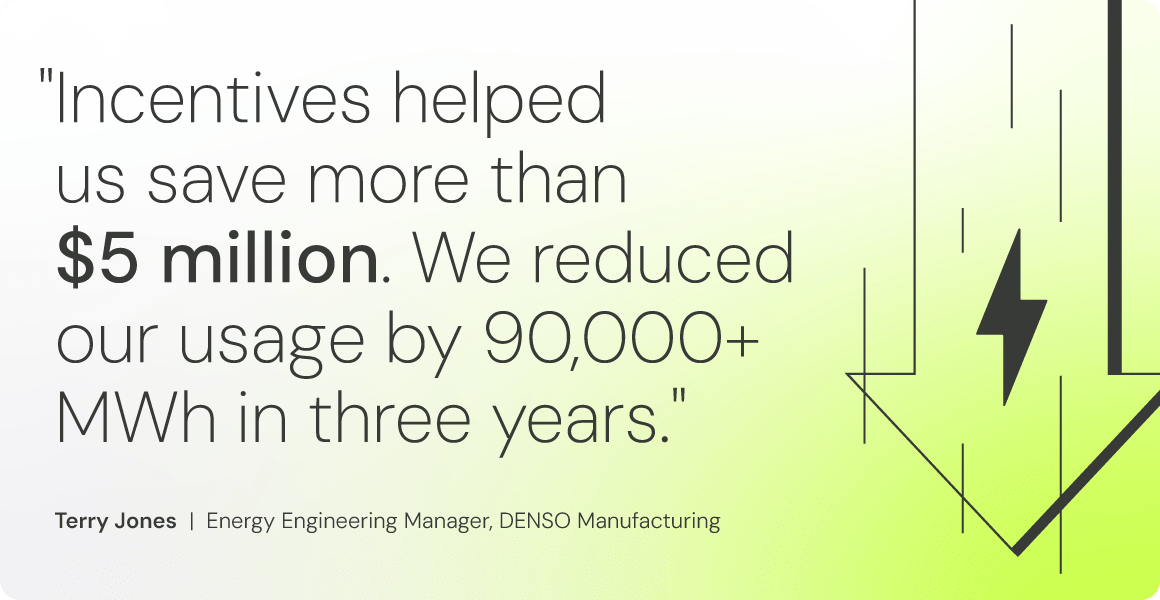
Once your project is complete, you’ll start saving energy, and you’ll earn an incentive. Incentives are paid upon completion of a project based on the estimated energy savings in the first year.
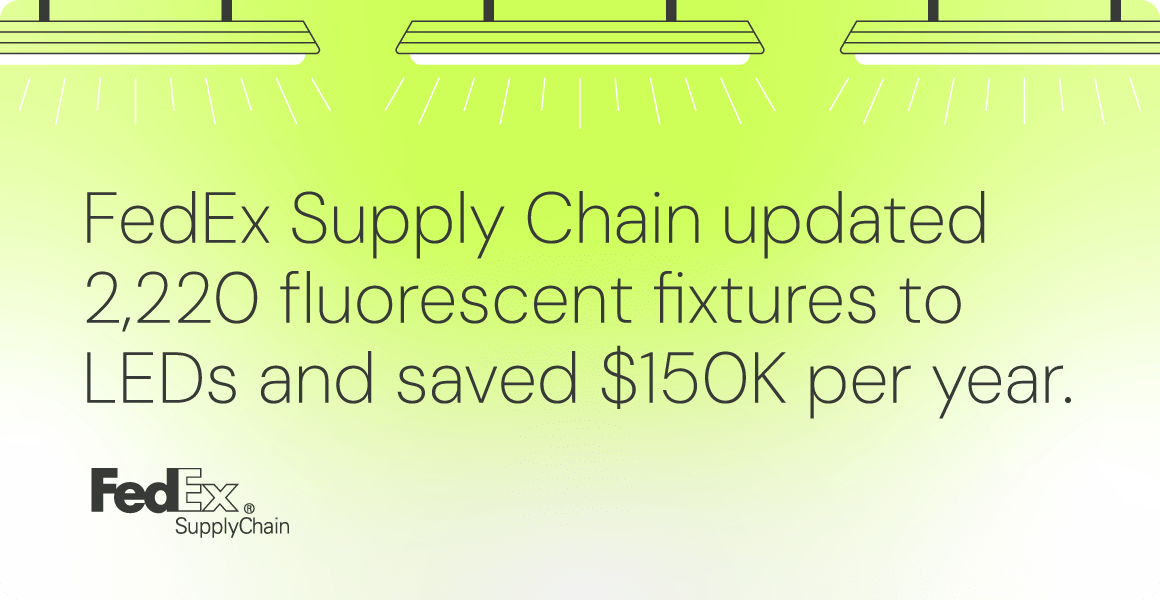
For example, replacing 2,200 fluorescent bulbs with LED lighting, FedEx Supply Chain is projected to save more than 1,754,348 kWh of electricity annually. Not only did they earn a $175,434 incentive from TVA EnergyRight in partnership with local power company Memphis Light, Gas and Water, but FedEx Supply Chain also reduced operational and energy costs by an estimated $150,000 annually.
The incentive earnings help offset project costs and improve overall payback and ROI.
What this means for your business:
Investing in efficiency is good for your bottom line.
Incentives work best when they support real projects.
The most successful incentive projects don’t start with paperwork. They start with a real-world challenge — improving efficiency, lowering costs or modernizing operations. Energy incentives simply help make those improvements easier to fund.
For businesses and managers balancing performance, budgets and reliability, that support can make the difference between delaying a project and moving it forward. To learn more about incentive upgrade options for your business, connect with a TVA Energy Expert today.