
How to make HVAC and heat pump upgrades work harder for your bottom line.
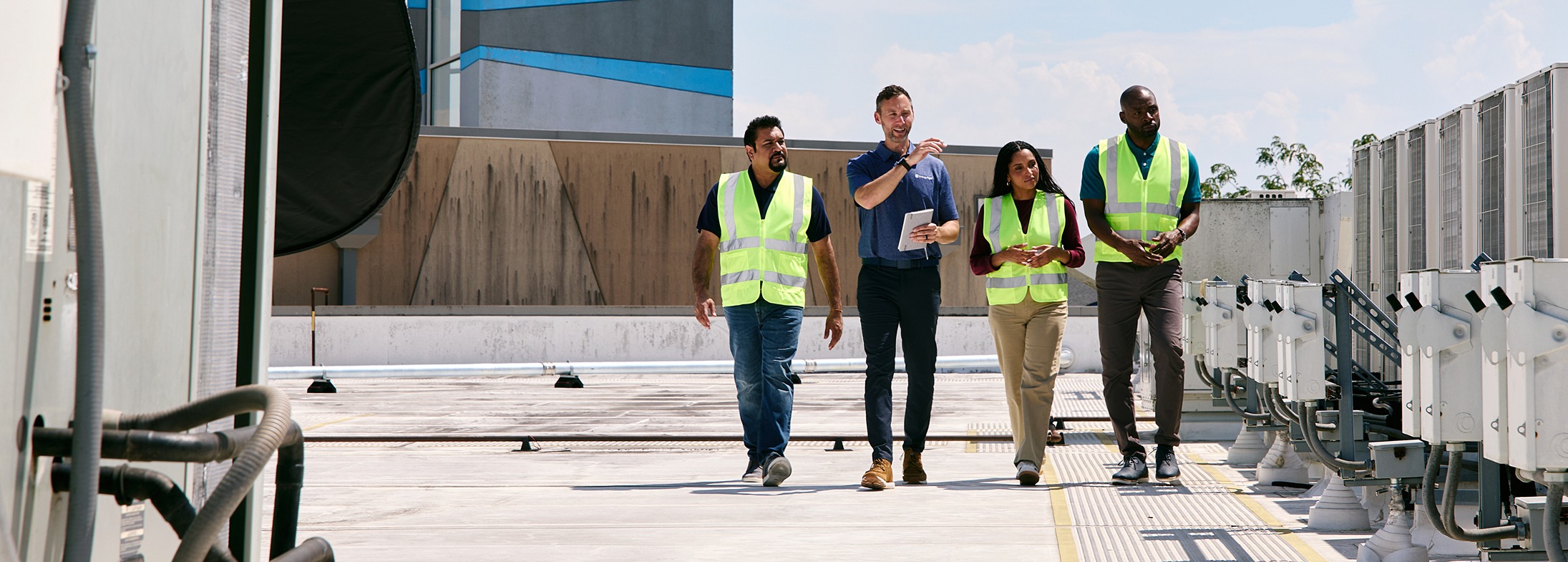
For small and medium-sized businesses, every operational decision needs to pull its weight. Upgrading your HVAC system or installing a high-efficiency heat pump isn’t just about keeping your employees comfortable (although that’s important, too!); it’s a strategic investment that can reduce operating costs, improve productivity and protect your business from rising energy expenses.
When designed, installed and operated correctly, modern HVAC and heat pump systems can become some of the most reliable contributors to your bottom line. Here’s how to make sure your upgrade works harder for your business, not just your building.
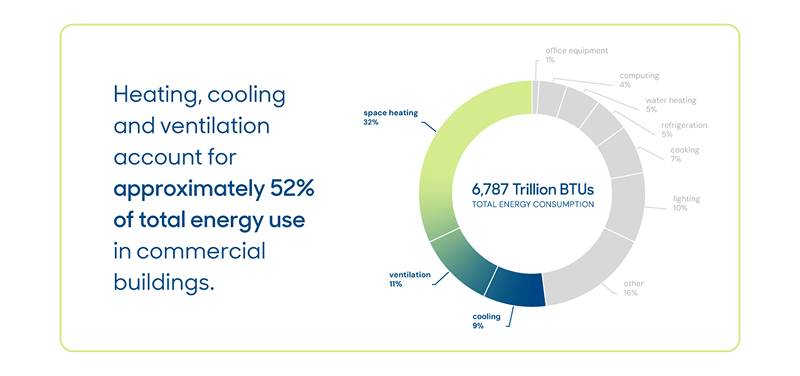
Source: U.S. Energy Information Administration
Start with your business’s needs, not the equipment.
Heating, cooling and ventilation account for over 50% of total energy use in commercial buildings. For many small to medium-sized businesses, inefficient HVAC systems quietly drain thousands of dollars each year through inefficiencies, wasted energy and frequent maintenance calls.

Here are 10 strategic, ROI-driven questions you can ask as you think about upgrading your HVAC system.
- What are my annual heating and cooling costs?
- How much do I spend on annual maintenance and repair?
- How often do breakdowns disrupt operations (and how much does that cost me)?
- How long do I plan to occupy the space?
- How old is my existing HVAC system?
- What is the installed cost vs. annual energy savings?
- Are hot or cold spots affecting productivity or customer experience?
- Are there incentives available to help offset the cost?
- Can zoning, smart thermostats or building controls reduce run time?
- What is the lifecycle cost over 10-15 years?
For many small and medium-sized businesses, a three-to-five-year payback is strong. Longer payback periods can still make sense if comfort and reliability gains are significant. And remember, HVAC incentives can dramatically reduce payback periods and improve ROI.

By framing HVAC upgrades as an operating expense reduction — not just a capital cost — you can evaluate options based on payback period, lifecycle cost and long-term savings.
If you lease your space, it may be worth having a conversation with your landlord about HVAC upgrades. Check out “How to talk to your landlord about energy upgrades” for a few conversation-starters and tips.
Pair equipment upgrades with supplemental energy efficiency measures.
Even the most efficient HVAC system can underperform if your building isn’t optimized for energy efficiency.
If you have access to your building ducts, make sure they’re well-sealed and insulated. Use caulk and weatherstripping to seal gaps around your building’s doors and windows. Consider installing LED lighting to reduce heat emissions and lower your air conditioning costs in the summer.
As you consider HVAC systems, you’ll also want to think about how smart thermostats, zoning controls and occupancy sensors may help ensure that energy isn’t wasted by conditioning empty spaces.
For more tips and free energy-saving items such as a smart thermostat, smart plug, weatherstripping and more, request a Smart Energy Starter Kit.

Choose high-efficiency HVAC technology.
Modern HVAC and heat pump systems are designed to deliver more output using less energy. As you consider your options, look at the SEER2 ratings. SEER stands for Seasonal Energy Efficiency Ratio, and the higher the SEER2 rating, the more efficient the system. Check out our SEER2 FAQs for more information.
Other important efficiency features to consider include:
Variable-speed technology
Unlike older single-speed systems that cycle on and off, variable-speed systems adjust output in real time. This means:
- Lower energy use during mild weather.
- More consistent indoor temperatures.
- Reduced wear and tear on components.
Heat pump technology
Heat pumps move heat inside during the winter and outside during the summer. Because heat pumps move heat rather than generate it, they can operate with significantly higher efficiency than conventional heating and cooling systems.
Unlike a conventional furnace, which generates heat by burning gas or oil, a heat pump extracts heat from the air, ground or water. Heat pumps provide both heating and cooling using electricity, making them especially effective in the TVA region. Benefits include:
- High efficiency in moderate climates (such as our seven-state Tennessee Valley region).
- Fewer carbon emissions.
- Lower maintenance needs compared to traditional systems.
Improve ROI with HVAC incentives.
One of the fastest ways to improve the financial performance of an HVAC or heat pump upgrade is by taking advantage of available incentives.
TVA EnergyRight and your local power company are offering incentives on unitary A/C units and heat pumps, air-cooled chillers, VRF heat pumps, dual fuel heat pumps and ground source heat pumps.
These incentives can significantly reduce up-front costs and shorten payback periods.
Before purchasing equipment, be sure to identify a qualified contractor familiar with TVA EnergyRight incentives to ensure that your project qualifies.
Take care of your investment.
Many modern HVAC systems offer built-in monitoring or integration with building management systems, allowing you to track performance and identify opportunities for optimization.
Consistent monitoring may also help prevent small issues from becoming costly breakdowns and contribute to keeping your energy costs predictable. Ask your contractor about annual maintenance and seasonal performance checks to keep your new investment operating at peak efficiency.
Factor in the unexpected benefits of an HVAC upgrade.
While energy savings are fundamental to your decision, comfort also has a direct impact on business performance and asset value.
Spaces that are too hot or too cold can lead to reduced employee productivity, increased complaints, more downtime and negative customer experiences. On the other hand, efficient HVAC systems maintain stable temperatures and promote better indoor air quality, creating a more comfortable environment for both employees and customers.
Over time, this can translate into higher productivity, better employee retention and stronger customer satisfaction. These benefits don’t always show up on an energy bill — but they absolutely affect your bottom line.
In addition to comfort and customer experience, HVAC upgrades can increase your property’s value, improve resale or lease value and contribute to a stronger asset balance sheet.
Plan now to avoid stress later.
Often we wait until our current HVAC system fails and then make a rushed decision to replace it. If your system is more than 10 years old, now is the time to plan ahead and decide what to buy. Run the numbers on a high efficiency system with your favorite experts and explore the incentives available. When failure occurs, you’ll be prepared to make a smart decision.
Keep the big picture in focus.
Upgrading your HVAC system can:
- Lower energy costs.
- Reduce maintenance and downtime.
- Improve comfort, productivity and customer experience.
- Strengthen your asset value.
- Enable you to take advantage of financial incentives that accelerate payback.
TVA EnergyRight for Business & Industry helps small and medium-sized businesses make smart energy decisions that reduce costs, improve performance and support long-term success.
When your HVAC works better, your business does, too.
Related stories
-
 Business & Industry
How Ole Miss modernized its campus energy systems with TVA EnergyRight.
View more‘Ole Miss’ (the University of Mississippi) partnered with TVA EnergyRight® and local power company Northeast Mississippi Electric Power Association to transform campus energy management, delivering major upgrades to lighting, HVAC systems, and overall efficiency. Working alongside Trane Energy Services, the team conducted detailed energy audits aligned with TVA EnergyRight incentives, ensuring the modernization project remained […]
-
 Business & Industry
6 bright ways LED lighting supports workplace productivity.
View moreCutting operational costs without sacrificing quality or efficiency can be challenging for small to medium-sized businesses. Happily, controlling energy costs and making energy efficiency upgrades is a great way to protect your business’s profit margins while improving your work environment. Which brings us to LED lighting: Upgrading your lighting systems is one of the most […]
-
 Business & Industry
Are your compressed air systems the hidden energy drain in your facility?
View moreCompressed air is one of the most widely used utilities in industrial facilities — and one of the most expensive to operate. Because it operates quietly in the background, inefficiencies often go unnoticed until energy costs start to rise and equipment performance declines. For many facilities, aging compressed air systems are consuming more energy than […]