
What to expect from a free Home Energy Evaluation.

A professional home energy audit — like our Home Energy Evaluation — is a great first step in assessing how much energy your home uses and figuring out what to do about it.
Maybe you’re surprised by how much energy your home uses, perhaps you’re mystified by a draft in the hallway. Or, maybe you’re just curious about energy efficiency and discovering new ways to make your home more energy efficient. Get started today by clicking this “Get an evaluation” link!

Most homes are quietly losing energy — and money — in ways that aren’t always obvious. The good news? You don’t have to figure it all out on your own.
Our DIY Home Energy Assessment can be a great place to start learning about how your home consumes energy. However, if you’re looking for a more complete audit and advice from pros, then our free Home Energy Evaluation is the way to go. Our in-person evaluations are led by certified TVA Energy Advisors, and these professionals will help you take your learning and your energy savings to a whole new level.
You can expect a thorough, guided walk-through of your home with a certified expert who knows exactly what to look for. No confusing technical jargon. No pressure. Just real answers tailored to your home—and a clear path to comfort and savings.
After the evaluation, you’ll receive a detailed report with personalized recommendations and an energy efficiency scorecard that helps you prioritize the areas of your home where you can make the biggest efficiency gains. From there, you can move forward at your own pace — whether that means tackling a few quick fixes right away or saving for larger upgrades down the road. You’ll also receive a free energy-saving kit that includes items such as:
- Advanced power strip with USB-A and USB-C charging ports
- Water conservation devices
- Door Sweep
- LED nightlight
- And more!
What is a Home Energy Evaluation?
Think of it like a wellness checkup for your home. Just as you’d visit a doctor to understand what’s going on with your body and its systems, a Home Energy Evaluation helps you understand your home and its systems. They’ll make sure you truly understand how your home uses and loses energy.
A TVA-certified Home Energy Advisor will arrange a time to visit your home. When they arrive, they’ll introduce themselves and then get to work taking a closer look at the areas that affect your comfort and your energy bills. You’re welcome to join them or sit back and wait for the customized results.
They’re not there to sell you anything or overwhelm you with a massive to-do list. They’re there to help you see what’s really happening in your home and give you practical, personalized recommendations that make sense for your situation.
You might be surprised by what they find. Sometimes it’s the small things — a leaky duct in the attic, an old refrigerator working overtime or gaps around windows that you never noticed. All these discoveries can add up to big energy losses.
They’ll also inspect the “biggies,” such as insulation levels or the efficiency of your heating and cooling systems. Either way, you’ll walk away knowing exactly where your energy-saving priorities are and what you can do about them.
Why a professional evaluation beats guesswork.
We know there’s no shortage of DIY energy-saving tips online. And some of them are great, like our DIY Home Energy Assessment! But trying to piece together an energy-saving strategy can leave you wondering: Is this actually the biggest issue for my home? Will this fix really work for me?
That’s where the value of a professional evaluation comes in. Your Home Energy Advisor isn’t guessing. They have the tools and training to spot issues that impact your home’s individual performance. The advice is specific and tailored to your home.
Our evaluations are customized to you. Your advisor will take the time to understand your home, your concerns and your goals. If you’re worried about a specific room, they’ll focus there. If your biggest concern is high energy bills, they’ll prioritize the upgrades that will give you the most savings.
And here’s the part that really matters: you’re not alone in this. You have someone who knows what they’re doing, walking you through it step by step.
What does your Home Energy Advisor evaluate?
During your evaluation, your advisor will examine 10 key areas of your home. Each one plays a role in how efficiently your home uses energy — and how comfortable you feel inside.
#1 — Air sealing
Air leaks around windows, doors, outlets and other hidden spots can let your heated or cooled air escape. Your advisor identifies where these leaks are happening and recommends solutions to seal them up.
#2 — HVAC system
Your heating and cooling system is one of the biggest energy users in your home. Your advisor checks to make sure it’s running efficiently and lets you know if upgrades could save you money. They’ll also walk you through our rebate process so you’ll know what to expect.

#3 — Duct sealing
If your ducts have leaks, you could be losing a significant amount of conditioned air before it even reaches the rooms in your home. Your advisor assesses your ductwork and recommends sealing where needed.
#4 — Windows and doors
Old or poorly sealed windows and doors can be major sources of energy loss. Your advisor evaluates their condition and suggests improvements that make sense for your budget.
#5 — Water heater
Water heating accounts for a substantial portion of your energy use. Your advisor looks at your current system and explores whether an upgrade — like a high efficiency heat pump water heater — could cut costs.
#6 — Wall insulation
Insulation in your walls helps keep your home at a comfortable temperature year-round. If it’s missing (a lot of older homes in our region are not insulated) or insufficient, your advisor will let you know.
#7 — Appliances and electronics
Everything from your refrigerator to your stove, and your TV to your microwave, contributes to your energy use. Your advisor identifies opportunities to save by upgrading to more efficient models.
#8 — Lighting
Switching to energy-efficient LED bulbs — indoors and outside — is one of the easiest ways to save. Your advisor can recommend upgrades that brighten your home and garden while lowering your bills.
#9 — Refrigerator
If your refrigerator is more than 10 years old, it’s likely using far more energy than newer models. Your advisor assesses whether it’s time for a replacement.
#10 — Attic insulation
Heat rises—and if your attic isn’t properly insulated, that heat escapes right through your roof in winter. In summer, poor attic insulation lets heat pour in. Your advisor checks your insulation levels and recommends improvements if needed.
Each of these areas gets individual attention during your evaluation. And at the end of the visit, you’ll receive a customized report with specific recommendations for your home.
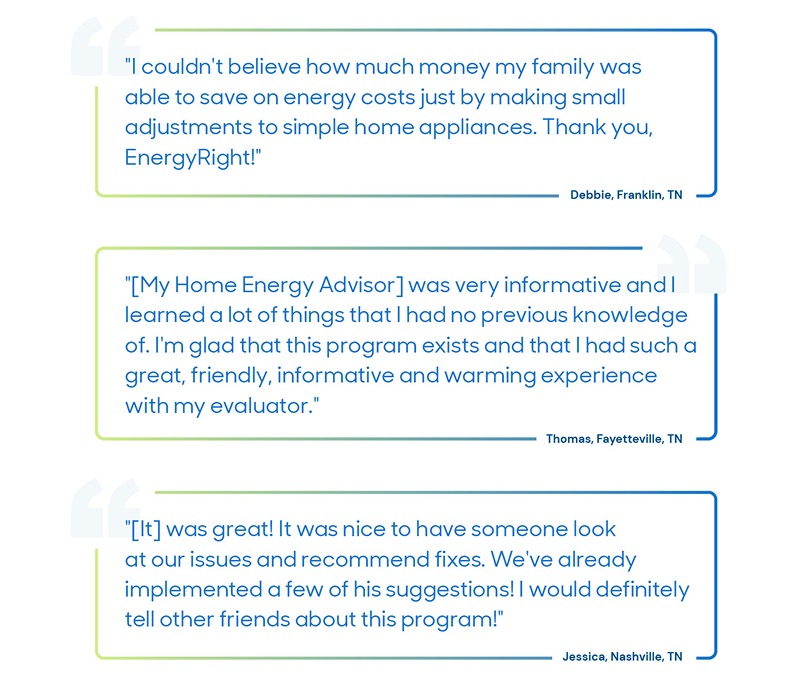
What homeowners from around the region are saying about their Home Energy Evaluation:
We know that inviting someone into your home to assess its efficiency feels like a big step. Will it really help? Is it worth the time? Here’s what some of your neighbors in our seven-state Tennessee Valley region have experienced:
Saving money on energy costs is a great reason to schedule a Home Energy Evaluation. But there’s more to it than that.
When your home is more energy efficient, it’s also more comfortable. No more cold drafts in winter. No more sticky rooms in summer. No more wondering why one part of the house feels completely different from another.
You’ll also have peace of mind knowing that your home is working the way it should. You won’t have to guess whether your HVAC system is working as it should or if you’re wasting money on an outdated water heater. You’ll have clear, expert answers — and a plan for what to do next.
And if you’re thinking about upgrades, your evaluation helps you prioritize. Not everything needs to be done at once. Your advisor will help you understand which improvements will have the biggest impact, so you can tackle them in a way that works for your timeline and budget.
How to get started:
Scheduling your Home Energy Evaluation is easy. Just click this “Get an evaluation” link and we’ll get started.
Once you’re scheduled, your TVA-certified Home Energy Advisor will come to your home at a time that’s convenient for you. The evaluation typically takes about an hour, and you’re welcome to follow along and ask questions as they go.
We understand that thinking about home energy improvements can feel overwhelming. There are so many options, and so much information that it’s hard to know where to start.
That’s why we’re here. A Home Energy Evaluation gives you a clear starting point, guided by someone who knows what they’re doing.
5 ways to maximize the efficiency of your heat pumps and ductless mini splits.

If your HVAC system is 10-15 years old and you’re proactively considering replacing it, you may be exploring heat pumps. Ductless mini splits as well as ducted dual fuel and air source heat pumps are all great options for our seven state region.
As you consider your HVAC replacement options, here are a few practical tips for getting the most out of a new heat pump system.
Understanding how heat pumps work best.
Before we dive into efficiency tips, it helps to understand what makes these systems special.
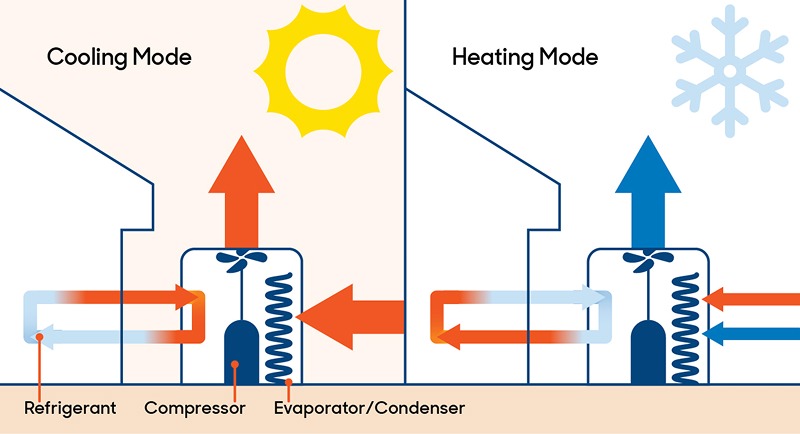
Heat pumps use electricity to transfer heat from a cool space to a warm space. During cold seasons, they move heat from outside air and pump it into your home to warm it. During warmer seasons, they move heat from your home into the outdoors. Because heat pumps transfer heat — rather than generating it — they are significantly more efficient than traditional heating systems.
For a deeper dive into the mechanics of heat pumps, check out this blog.
If you’re considering a ductless system, a mini split may be the way to go.
#1 — Set it and forget it.
Keep your fingers off your thermostat. Really! Heat pumps work differently from traditional furnaces. While it stands to reason that lowering your thermostat anytime you feel like it will reduce energy use, that’s not the case with a heat pump. These systems actually perform best when maintaining a steady temperature.
Find a temperature that’s comfortable for you and stick with it. Remember, every degree counts, so find your coolest comfortable range in the winter (aim for 68-72 °F) and your warmest threshold in the summer (aim for 74-78 °F). If you know you’ll be away from home during the work day or for a prolonged vacation, lower your thermostat by just 3-5 °F. The same principle applies to your overnight settings.
And although the “auto” mode may seem tempting. Avoid using it if you have a heat pump. It can force your system to cycle between heating and cooling unnecessarily.
If you have a smart thermostat, you can program it to precondition — pre-heat or pre-cool — your home 30 minutes before you return.
Do not set back the heat pump’s thermostat if it causes the backup heating to come on. Backup heating systems, such as electric resistance or electric strip heaters, are usually more expensive to operate because they are less efficient.

#2 — Clean or replace filters regularly.
Just like a conventional furnace, your heat pump benefits from clean filters, too!
Your heat pump’s air filter is a little bit like your lungs: Just as your lungs have to work harder in smoky or smoggy conditions, a dirty filter forces your heating and cooling system to work harder. And a system that’s laboring — whether it’s you or your furnace! — simply isn’t as efficient as it could be. And in the case of a heat pump, hard work means higher energy bills and more wear and tear on your equipment. A few minutes spent cleaning filters can make a real difference in your comfort and your wallet.
For ducted air source and dual fuel heat pumps, we recommend cleaning or changing filters every three months or as recommended by the manufacturer or installer.
For ductless mini splits, filters should be cleaned every two to four weeks, especially in high-use seasons or homes with pets, dust or allergies. The good news? Most mini split filters are reusable. Just rinse them under a faucet, let them dry completely and put them back. Be sure to refer to your user’s manual for detailed instructions.
#3 — Keep outdoor units clear and clean.
Your outdoor unit works hard year-round, so give it some breathing room.
Clean heat pump outdoor coils with a gentle stream of water whenever they appear dirty. With the power to the fan turned off, remove vegetation, dust, pollen and clutter from around the outdoor unit.
Make sure there’s at least two to three feet of clearance around the unit. Trim back shrubs, remove leaves and clear away any debris after storms. In winter, gently brush off snow (never use hot water—it can damage the coil).
#4 — Schedule a routine tune-up.
DIY is great, but we can’t emphasize this enough: professional maintenance is worth every penny. That’s one of the reasons we offer a $50 rebate on tune-ups.
#5 — Performance boosters are a great idea.
Up to 30% of conditioned air — heated or cooled — can be lost through leaky ducts. If you’re investing in a high efficiency system, and you want to maximize its efficiency, you’ll want to make sure that your ducts are in good shape. And guess what? There’s a rebate for that, too.
Thermostats can also make a big difference. If you don’t already own a smart thermostat, having one installed as part of your new system is a solid move.
If you have questions about your system or need help finding a qualified contractor for installation or routine maintenance, check out our find a contractor tool. You can search for local, TVA-vetted contractors for free. They’ll help you decide on a system that’s best for your home and can help you apply for rebates, too!
What’s a dual fuel heat pump?

When the weather can’t commit, your heat pump can.
Here in the Tennessee Valley region, we’re all quite familiar with weeks that keep you on your toes temperature-wise. You know, those weeks when Mondays have you ramping up the air conditioning and Wednesday has you firing up the heat. Don’t even get us started on those tricky Tuesdays when you need a little of both!
If you’ve ever adjusted your thermostat more than once in a single day — or you routinely thank your lucky stars that you have a smart thermostat — you’re not alone. The good news is that today’s heating and cooling technology is built to handle exactly this kind of weather.
Some of the most flexible and efficient options available to people in our region are heat pumps. In this post, we’ll take a look at dual fuel heat pumps, specifically. These systems may also be called hybrid heat pump furnaces or dual fuel HVAC systems.
These popular heat pumps combine two proven technologies into one integrated system — with an indoor furnace and an outdoor unit — designed to keep your home comfortable, no matter what the forecast looks like.
Let’s walk through what a dual fuel heat pump is, how it works and why so many homeowners are choosing this system for their home.
What is a dual fuel heating system?
At its simplest, a dual fuel heating system pairs an electric heat pump with a gas (or propane) furnace. Together, they create a heat pump with gas backup that automatically switches between the most efficient energy source based on outdoor conditions.
You don’t have to flip switches. You don’t have to monitor temperatures. The system seamlessly does the decision-making for you.
How does a heat pump work?
A heat pump doesn’t “make” heat by burning fuel like an old-school furnace. Instead, it moves heat from one place to another. And guess what? You almost certainly already have one in your home! Refrigerators work on heat pump technology: They don’t create cold air; they remove heat from inside the fridge and release it into your kitchen.
Side note: That’s why it’s a good idea to keep a gap between your fridge and the wall to encourage adequate air circulation. (Visit our tips and advice page for more easy energy-saving ideas.)
Instead of keeping your fruits and veggies fresh, a heat pump keeps your home at a cozy temperature. In summer, it moves heat from inside your house to the outdoors, cooling your space. In winter, it pulls heat from outdoor air and moves it inside.
Believe it or not, even when it feels chilly outside, there’s still usable heat energy in the air. Modern heat pumps are designed to capture and transfer that energy efficiently.
Where the “dual fuel” part comes in.
Heat pumps are incredibly efficient in mild and moderately cold temperatures — which is what our seven-state region usually enjoys. However, when outdoor temperatures drop … and then drop some more as they did during the 2026 ice storm, a gas-powered back-up furnace can heat more quickly and powerfully.
Here’s how it typically works: On mild or cool days, the heat pump provides warmth using electricity. When temperatures fall below a certain point, the system automatically switches to the gas furnace.
You always get the most efficient and effective heating option — without having to think about it.
One energy efficient system that heats and cools.
Are you ready for the best part? If you already have both an AC and gas furnace, you can consolidate with a dual fuel heat pump that takes care of both heating and cooling! That means one system, one set of controls and a coordinated, efficient approach to heating and cooling your home.
If your HVAC equipment is more than 10 years old or struggles to keep you and your family comfortable, it may be time to consider replacing it. For homeowners with aging equipment, upgrading to a dual fuel HVAC system can simplify maintenance and improve performance. A professional evaluation can help determine what makes the most sense for your home’s size, layout and comfort needs.
For more information about heating and cooling systems, we encourage you to reach out to a TVA-vetted member of the Quality Contractor Network. They’ll assess your home and your family’s needs and make a recommendation that fits your lifestyle.

Designed for consistent indoor temperatures.
Older heating and cooling systems often operate in an “all or nothing” way. They turn on at full power, then shut off, then turn on again.
This can lead to:
- Hot and cold spots throughout your home.
- Noticeable temperature swings.
- Frequent thermostat changes.
Many modern heat pumps use variable-speed technology, which allows them to run at different levels instead of just full blast.
That means:
- More even temperatures throughout your home.
- Fewer sudden bursts of hot or cold air.
- Less wear-and-tear on your equipment.
The result is a steadier, more comfortable indoor environment — especially during those shoulder seasons when days are warm and nights are cool. And when tricky Tuesdays are both.
Why a dual fuel heat pump is an energy-efficient choice.
In addition to the convenience of an all-in-one heating and AC system and the peace of mind that a gas-powered furnace provides, energy efficiency is one of the biggest reasons homeowners explore dual fuel systems.
Here’s what makes them so efficient:
- They move heat instead of generating it. Moving heat requires less energy than creating it. Because heat pumps transfer existing heat, they can deliver more comfort using less electricity.
- They use electricity during milder weather. When outdoor temperatures are moderate, the electric heat pump handles most of the heating using electricity, which is typically more efficient than burning fuel.
- They switch to gas only when needed. The gas furnace runs when it’s most helpful — during very cold conditions — so you’re not using fuel when a more efficient option will do.
- They avoid wasted energy. Variable-speed operation and smart controls help prevent the constant on/off cycling that wastes energy in older systems.
Over time, this efficiency can lead to lower energy bills, reduced energy waste and a better long-term value.
Rarely uses fossil fuels.
Today’s heat pumps are far more capable than earlier generations. They’re built to perform in colder temperatures and changing conditions. No matter what the weather brings, your system is ready.
Because the heat pump handles heating during milder conditions, your dual fuel heat pump-equipped home will rely less on gas or propane than a conventional furnace.
That means:
- More stable energy usage.
- More predictable utility bills.
- Less dependence on fuel deliveries.
The dual fuel approach offers a practical middle ground for homeowners who want efficiency and reliability.
What’s next?
You don’t have to become an HVAC expert to take the next step.
- Check your system’s age.
- Look into rebates and incentives.
- Schedule an energy assessment or HVAC evaluation with a member of the Quality Contractor Network.
- Ask them about dual fuel or hybrid heat pump options.
- Don’t forget to ask your contractor to submit your rebate application on your behalf.
Comfort that cooperates, even when the weather won’t.
A dual fuel heat pump gives your home the flexibility to handle warm afternoons, cool evenings and everything in between — without constant adjustments or guesswork.
It’s a smart, steady approach to comfort that helps homeowners feel confident about their choices and capable of taking the next step.
To learn more about dual fuel heat pumps, available rebates and home energy upgrade options, visit EnergyRight.com and explore what’s possible for your home.
Understanding air source heat pumps: Your guide to comfort and savings.

If you’re starting to think about replacing your aging heating and cooling system or you’re interested in making your home more energy efficient, you’ve probably come across the terms “air source heat pump” and “dual fuel heat pumps” more than once. If you’re still wondering which one is right for you, this blog should help!
Let’s break it down together in a way that makes good energy sense.
What is an air source heat pump?
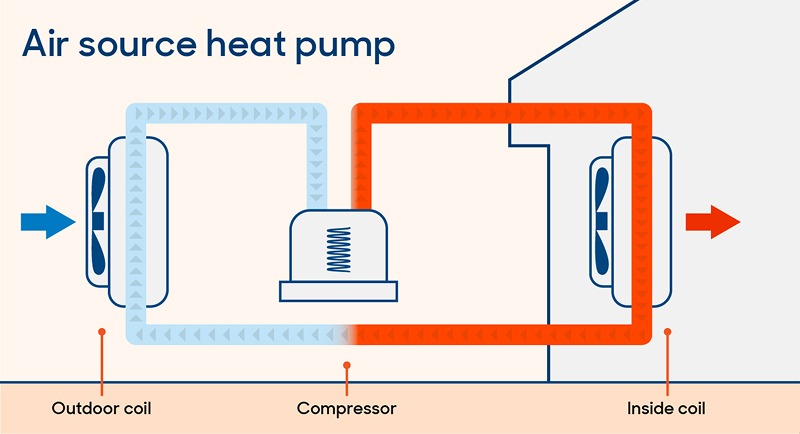
An air source heat pump is an all-electric system that keeps your home comfortable year-round by moving heat from one place to another.
Think of it like this: Your refrigerator doesn’t make cold air. It pulls heat out of the fridge and releases it into your kitchen. An air source heat pump does the same thing, just on a much bigger scale.
In the summer, it removes heat from inside your home and releases it outside, keeping you cool.
In the winter, it pulls heat from the outdoor air (yes, even when it’s cold outside!) and brings it inside to warm your home.
According to the U.S. Department of Energy, when properly installed, an air source heat pump can deliver up to two to four times more heat energy to a home than the electrical energy it consumes, because it transfers heat rather than converting it from fuel.
Because it’s moving heat around instead of burning fuel to generate it, an air source heat pump uses far less energy than many traditional systems. And that can mean real savings on your energy bills — which is something we can all appreciate.
A system that does it all.
Right now, many homes rely on two separate pieces of equipment: A furnace to keep you warm and an air conditioner to keep you cool.
An air source heat pump combines both jobs into a single system — with an external condenser unit and an furnace/air handler inside. That means:
- One piece of equipment heating your home.
- One piece of equipment cooling your home.
- One thermostat controlling everything.
This streamlined setup can make life easier. You have fewer systems to maintain, fewer service calls to schedule, and when it’s time to replace aging equipment, you can upgrade everything at once.
If your furnace or air conditioner is starting to show its age (most HVAC systems last 15-20 years), switching to an air source heat pump gives you a chance to replace both with one high-efficiency solution.
Designed for steady, even comfort.
Have you ever noticed how older heating and cooling systems can make your home feel like it’s sticky one minute and icy the next — blasting hot or cold air, then shutting off completely? It can leave some rooms feeling perpetually stuffy, while other rooms feel as though they could keep ice cream from melting.
There’s a fix for that. Many modern air source heat pumps use variable-speed technology. Instead of being “on” or “off,” the system runs at different levels to keep your home consistently comfortable.
This helps:
- Maintain steadier indoor temperatures throughout the day.
- Reduce those annoying hot and cold spots in different rooms.
- Deliver quieter operation, so you hardly notice it’s running.
Rather than cycling on and off in big bursts, the system makes small, gentle adjustments. For many families, this creates a calmer, more balanced indoor environment — which means fewer complaints about being too hot or too cold.
Works in all kinds of weather.
You might be wondering: “But what about winter? Can a heat pump really keep my home warm when it’s cold outside?”
Great question — and the answer is yes.
Today’s air source heat pumps are far more advanced than earlier models. According to the Department of Energy, cold climate air source heat pumps can reduce household energy consumption by up to 40%, and they’re designed to work effectively even in regions with extended periods of subfreezing temperatures.
Technology improvements in compressors, controls and refrigerants have made modern heat pumps a realistic option for homes across many climates — not just warm Southern states.
That means your heat pump can:
- Provide efficient cooling in summer.
- Deliver reliable heating in winter.
- Adjust automatically as outdoor temperatures change throughout the year.
All-electric and energy efficient.
Air source heat pumps run on electricity, not natural gas, propane or oil. And because they move heat instead of creating it, they’re incredibly efficient.
The Department of Energy notes that ducted air source heat pumps can reduce your electricity use for heating by up to 75% compared to electric resistance heating such as furnaces and baseboard heaters.
For homeowners, this can mean:
- Lower overall energy use and smaller utility bills.
- Reduced dependence on delivered fuels like propane or oil.
Every home is different, but many families notice improved efficiency and comfort after making the switch.
Built to save you money over time.
Energy efficiency isn’t just about this month’s bill. It’s about choosing equipment that performs well year after year — and helps you save money in the long run.
Air source heat pumps are designed with this long-term performance in mind and rely on:
- High-efficiency compressors that use less energy.
- Smart controls that adjust based on real-time conditions.
- Fewer energy losses compared to combustion-based systems.
Over time, these features add up to:
- Lower monthly utility bills.
- Less wasted energy.
- A better return on your investment.
Air source heat pumps vs. dual fuel systems: What’s the difference?
We promised you we’d hit on the differences between air source and dual fuel heat pumps, and here we are! (If you want a deeper dive into dual fuel heat pumps, check out this blog.)
They’re related, they’re not the same thing.
Air source heat pump:
- All-electric system.
- Provides both heating and cooling.
- Uses electricity year-round.
- Moves heat rather than generating it.
Dual fuel heat pump (AKA hybrid heat pump):
- Combines an air source heat pump with a gas or propane furnace.
- Uses the heat pump during milder temperatures.
- Automatically switches to the furnace during very cold conditions.
In other words, a dual fuel system includes an air source heat pump plus a backup furnace for extra cold days.
Why some homeowners choose an air source heat pump:
Many homeowners prefer a standalone air source heat pump because they:
- Want an all-electric home heating and cooling system.
- Don’t have access to natural gas service.
- Prefer fewer mechanical components to maintain.
- Are focused on maximizing energy efficiency.
According to EnergyRight.com, air source heat pumps can save you hundreds of dollars in heating costs each year. For many homes, a properly sized air source heat pump can handle both heating and cooling needs without needing any additional equipment.
Why some homeowners choose a dual fuel system.
Other homeowners lean toward a dual fuel approach because it:
- Adds a second heating source for extremely cold days.
- Provides extra peace of mind if they live in a region with harsh winters.
- Offers flexibility between electricity and gas, depending on energy costs.
Homes with existing gas service — or those in areas where winter temperatures regularly dip well below freezing — sometimes benefit from having both options available.
There’s no one-size-fits-all answer.
The best system for your home depends on your home’s size, layout and construction; insulation quality and air sealing; existing ductwork and utilities; and source of energy.
The good news? You don’t have to figure this out alone. A TVA-vetted member of the Quality Contractor Network can evaluate your unique situation and help you determine whether an air source heat pump or a dual fuel system makes the most sense for your family.
Simple steps to get started.
You don’t have to decide anything today. Getting informed is a great first step, and you’re already doing that by reading this.
Here’s how to move forward when you’re ready:
- Check the age of your current HVAC equipment — If it’s over 10-15 years old, it might be time to start planning for a replacement.
- Schedule an HVAC tune-up or evaluation — An HVAC professional can help you understand your home’s needs and provide a range of options.
- Ask about air source heat pump and dual fuel options — Get personalized recommendations based on your situation.
- Explore available rebates!
TVA EnergyRight® and your local power company can help connect you with trusted contractors from the Quality Contractor Network and available savings opportunities.

An efficient path forward.
Choosing a new heating and cooling system is a big decision — and you deserve to feel good about it.
Air source heat pumps offer an efficient, reliable way to keep your home comfortable year-round using one integrated system. For many homeowners, they provide steady comfort, lower energy use and peace of mind knowing their home is ready for the future.
Whether you ultimately choose an air source heat pump or a dual fuel system, understanding your options puts you in control. And you don’t have to navigate this alone — TVA EnergyRight® and your local power company are here to help you take the next step with confidence.
Click around our website to learn more about rebates, find a vetted contractor and start your journey toward a more comfortable, energy-efficient home.
You’ve got this — and we’re here to support you every step of the way.
Find trusted help for your home energy upgrades: Meet the Quality Contractor Network.

You know that feeling when you’re scrolling through online reviews, trying to figure out which contractor to trust? Maybe you’re thinking about upgrading your HVAC system, adding insulation or replacing an old water heater — but you’re not sure where to start or who to call.
We get it. Choosing the right contractor can feel overwhelming.
That’s exactly why the Quality Contractor Network exists — to reduce uncertainty and connect you with professionals you can truly trust.
Let’s walk through what the Quality Contractor Network is, why it matters for your peace of mind, and how working with a network member can make your home energy upgrades smoother, easier and more rewarding — especially when you’re planning to take advantage of TVA EnergyRight® rebates.
What is the Quality Contractor Network?
The Quality Contractor Network is a free resource provided by TVA EnergyRight and your local power company. It give homeowners like you access to licensed, insured and vetted contractors who meet TVA’s quality standards.
Instead of scrolling through endless search results and crossing your fingers that the first contractor who shows up on your doorstep up is reliable, the Quality Contract Network offers you a curated list of professionals who:
- Have met TVA’s training and quality requirements — they know what they’re doing.
- Are licensed and insured — to protect you and your home.
- Understand energy-saving upgrades — and how to do them right.
- Can help you qualify for rebates — and will even submit the paperwork for you.
How does it work for you?
Using the Quality Contractor Network is completely free and it’s easy, too. Whether you already have a specific project in mind or you’re just exploring your options, here’s how it typically works:
1. Find a member in your area.
Use the searchable find a contractor directory on EnergyRight.com to look up contractors by zip code and project type. You can filter by distance from your home, number of jobs completed and customer ratings. Check out “10 tips for finding a contractor you can trust” for more information about finding the right contractor for your home.
2. Talk through your project.
Whether you’re replacing old HVAC equipment, sealing ducts or improving insulation, a Quality Contractor Network member can assess your home’s specific needs and recommend energy-saving solutions that make sense for your situation.
3. Complete the upgrade.
The contractor performs the work according to TVA’s quality standards — and can submit any rebate applications on your behalf.
4. Claim and receive your rebate.
Once your contractor has submitted your rebate, you’ll receive a redemption code via email from TVA EnergyRight. Just follow the steps to claim your rebate, and you can expect to receive a check in the mail within 4-6 weeks.
Because members are trained to work directly with TVA EnergyRight programs, this entire process — from installation to rebate submission — is nice and easy.

Why choose a Quality Contractor Network member?
You might be wondering: “Can’t I just hire any local HVAC or home services provider?”
If you have a contractor you know and trust, but they aren’t members of the network, you can suggest they join the Quality Contractor Network. They can get started immediately by completing the application.
Here’s what you can expect from members:
1. Trusted, vetted professionals you can count on.
Every contractor in the Quality Contractor Network has been reviewed and approved based on TVA’s quality and training standards. That means they’re licensed, insured and prepared to do the job right — with your safety, comfort and long-term energy savings in mind.
This vetting process helps protect you from unqualified or uninsured workers who might offer a temptingly low price but deliver spotty results. Members of the QCN are required to meet TVA standards, which are based on Department of Energy recommendations and best practices.
That commitment to quality means better results for you.
2. Hassle-free rebate application.
One of the biggest perks of using a QCN member? They handle your rebate paperwork for you.
You don’t have to:
- Figure out complicated rebate forms.
- Track down the right efficiency ratings.
- Submit multiple documents or chase down approvals.
Your contractor completes the rebate submission after your upgrade is done. All you have to do is claim it — TVA will send you a redemption code, and you follow a few simple steps to request your rebate check.
3. Access to affordable financing options.
Many Quality Contractor Network members can also connect you with $0 down financing. This means you can spread the cost of eligible upgrades over time with manageable payments. In many cases, they can be added right to your utility bill — no big up-front cost required.
This can be a real game-changer if you’re considering upgrades like a new HVAC system or attic insulation but don’t want to pay — or can’t — all at once.
4. Peace of mind for big energy upgrades.
When you’re investing in major improvements — like replacing a heating and cooling system — you want to feel confident about the outcome.
QCN members aren’t just installers; they’re trained to understand energy efficiency, your comfort goals and long-term system performance. That means better results and fewer unpleasant surprises after the work is done.
Scott Duvall with Warren Rural Electric Co-Op Corporation sums it up well: “Sometimes finding a contractor to do work for you can be a job in itself. You worry if the person is going to do a good job. Are they going to get me the results I want? When you go through the QCN, you don’t have to worry about that”.
5. Quality inspections for extra reassurance.
Here’s something that really sets the QCN apart: After your contractor completes the work, TVA EnergyRight inspects it to make sure everything is done correctly.
Nathan Wagner, an energy specialist who works with Quality Contractor Network members in his area, explains his process: “I give them all the information they need up front to perform a pre-inspection before I arrive. It ensures they’ve checked all their boxes and done everything they needed. Then when I arrive, I examine their work to make sure they checked all those boxes and to make sure everything is operating correctly.”
This extra layer of oversight means you can rest easy knowing your upgrade meets TVA’s high standards.
What types of projects can Quality Contractor Network members help with?
QCN members offer a wide range of home energy services and energy-saving upgrades, including:
- HVAC system installation, repairs and maintenance — heat pumps, air conditioners, duct sealing and more.
- Home insulation and air sealing — keeping your conditioned air where it belongs.
- Duct sealing and duct system repairs — stopping energy leaks before they happen.
- Water heater installations or replacements — including efficient heat pump water heaters.
- Weatherproofing and other energy-saving upgrades — windows, doors and more.
A simpler, more confident way to upgrade your home.
Upgrading your home for comfort and energy savings doesn’t have to feel like a leap into the unknown. The Quality Contractor Network exists to make sure you’re connected with licensed and insured professionals who are ready to help you choose the right upgrades for your specific needs.
Instead of crossing your fingers and hoping you chose the right contractor from an online search, our network gives you a trusted starting point — and a smoother path to real savings and lasting comfort.
Ready to find your trusted contractor?
You deserve to feel confident about the people working on your home. The Quality Contractor Network makes that possible.
Here’s how to get started:
- Visit the Quality Contractor Network landing page.
- Select “find a contractor.”
- Enter your zip code and select your project type.
- Browse profiles of TVA-vetted contractors in your area.
- Filter by distance, ratings and completed jobs to find the right fit.
- Contact contractors directly through the portal.
It’s completely free to use, and you’ll have access to hundreds of trustworthy, licensed and insured professionals who are ready to help you save energy and money.
Power up your Earth Day: 5 super-cool energy experiments you can do at home!

Hey there, energy explorers!
Earth Day is almost here, and you know what that means? It’s time to celebrate our amazing planet AND learn some seriously cool science! This year, instead of just talking about taking care of Earth, let’s get our hands into some awesome experiments that show how energy works.
Ready to build a pizza box that cooks with sunshine? Want to make a car zoom using nothing but the sun’s rays? How about creating your own mini greenhouse?
We have five fantastic experiments that’ll help you understand solar power, wind energy and other Earth-friendly ways to keep our planet happy and healthy.
Grab your supplies, put on your lab goggles and let’s discover how renewable energy powers our world!

1. Solar oven pizza pockets.
You’re going to trap the sun’s energy and turn it into heat — just like giant solar panels do to warm water and air! The black paper soaks up sunlight, the foil bounces it around inside and the plastic wrap keeps all that toasty warmth from escaping.
What you’ll need:
- A pizza box or large cardboard box
- Aluminum foil
- Plastic wrap or a clear plastic bag
- Black construction paper
- Tape and scissors
- Marshmallows and chocolate squares
What you need to do:
- Cut a flap in the pizza box lid, but keep one side attached (like a door).
- Cover the inside of that flap with aluminum foil, shiny side facing in.
- Line the bottom of the box with black paper.
- Stretch plastic wrap over the opening to make a see-through window.
- Pop your marshmallows or s’mores inside, close it up and point it at the sun.
- Wait 30–60 minutes and watch the magic happen!
Cool Science Fact: Even when the air feels chilly outside, the sun’s light carries tons of energy. When you trap that energy, it turns into heat. That’s why your oven gets warm even on a cool day!
SOURCE: Jet Propulsion Laboratory
2. Simple solar-powered car.
Solar panels turn sunshine directly into electricity using something called photovoltaic cells. This little car shows you that the same sun powering lights in your house can make things move!
What you’ll need
- A small solar panel (from a hobby kit)
- A tiny DC-powered motor
- Wires and tape
- Bottle caps or lightweight wheels
- Cardboard or foam board
What you’ll do:
- Attach wheels to your cardboard to make a car body.
- Stick the motor on top and connect wires from the motor to the solar panel.
- Put the solar panel in direct sunlight.
- Watch your car zoom! (If it doesn’t move right away, try tilting the panel or finding a sunnier spot).
Cool Science Fact: Solar panels only make electricity when light hits them. That’s why real solar systems work best on sunny days — and why clouds can slow them down!
SOURCE: Science Buddies
3. Build a balloon-powered wind car.
Air rushing out of a balloon creates wind that pushes your car forward. It’s the same idea as wind turbines — they catch moving air to make electricity!
What you’ll need:
- A balloon
- A straw
- Tape
- A lightweight toy car or bottle cap wheels
What you’ll do:
- Tape the straw to the top of your car.
- Blow up the balloon but DON’T tie it — just pinch the end.
- Tape the balloon to the car so air shoots out through the straw.
- Set it on a smooth floor and let ‘er rip!
Cool Science Fact: Just like the balloon pushes your car, wind pushes giant turbine blades to spin and create electricity. Moving air has serious power!
SOURCE: Scientific American
4. Build a heat pump (sort of).
Heat pumps are super-smart systems that move heat from one place to another (instead of creating new heat). This experiment shows how evaporation cools things down and how moving air helps transfer heat — the big ideas behind refrigerators, dual fuel and air source systems, mini-splits and air conditioners!
What you’ll need:
- Two identical glass jars
- A cloth or dish towel
- Warm water
- Ice cubes
- A small fan (if you have one)
What you need to do:
- Soak your cloth or dishtowel in warm water and wrap it around one jar.
- Put ice cubes on top of the cloth.
- Leave the other jar alone (that’s your comparison jar).
- If you have a fan, aim it at both jars.
- Wait 10–15 minutes, then carefully touch both jars.
Cool Science Fact: Evaporation sucks heat energy from whatever’s around it. The jar with the wet cloth will feel cooler — that’s how heat pumps move heat instead of making it from scratch!
SOURCE: Home Science Tools
5. Greenhouse mini garden.
Greenhouses trap heat from the sun, just like Earth’s atmosphere keeps our whole planet warm. You’ll see the greenhouse effect up close AND grow something awesome!
What you’ll need:
- Clear plastic cups or containers
- Potting soil
- Seeds (beans, peas or herbs work great!)
- Plastic wrap or a clear plastic bag
- Water
What you’ll need to do:
- Fill your containers with soil and plant your seeds.
- Add water and cover everything with plastic wrap.
- Put it in a sunny window and watch what happens over the next few days!
Cool Science Fact: The plastic covering traps heat and moisture, helping your seeds sprout faster. Earth’s atmosphere does something similar to keep our planet at just the right temperature for life!
SOURCE: Liberty Science Center
How Ole Miss modernized its campus energy systems with TVA EnergyRight.

‘Ole Miss’ (the University of Mississippi) partnered with TVA EnergyRight® and local power company Northeast Mississippi Electric Power Association to transform campus energy management, delivering major upgrades to lighting, HVAC systems, and overall efficiency. Working alongside Trane Energy Services, the team conducted detailed energy audits aligned with TVA EnergyRight incentives, ensuring the modernization project remained financially viable while achieving long-term sustainability goals.
As part of its comprehensive modernization effort, Ole Miss implemented one of the largest campus lighting upgrades in its history, replacing 48,000 light fixtures across 94 buildings. By integrating these upgrades with long-term planning and utility partnerships, the campus not only reduced its overall energy footprint but also positioned itself to reinvest utility savings into future system improvements.
Project Highlights
The university focused on the following upgrades, balancing sustainability goals with long-term operational value:
- Campus-wide LED lighting retrofits that reduced energy consumption and maintenance demands
- Upgraded heating and cooling systems designed for improved performance and long-term reliability
- Energy audits structured to align project scope with available incentive programs
- Coordinated planning between TVA EnergyRight, LPC, and university leadership
- Verified energy savings delivering strong ROI and operational efficiency
A Model for Other Facilities
This project demonstrates what’s possible when strategic planning, incentive programs, and cross-organizational collaboration come together. The Ole Miss energy modernization effort offers a practical roadmap for:
- Universities and school districts exploring energy upgrades
- Facility managers pursuing efficiency improvements
- Organizations seeking incentive-supported capital upgrades
- Energy and sustainability program administrators
- Public institutions managing large energy portfolios
Ready to Take the Next Step?
Connect with your local power company or speak with a TVA EnergyRight expert to explore energy-efficiency solutions tailored to your facility or business goals.
6 bright ways LED lighting supports workplace productivity.


Calculate your LED lighting energy savings.
Upgrading inefficient metal halide and fluorescent fixtures to LED lighting can deliver strong financial returns along with meaningful operational benefits. Before we jump into six surprising benefits of LED lighting, let’s take a moment to consider the financial benefits: By implementing a comprehensive upgrade, you can enjoy energy savings of up to 75% with a payback period as short as 6-10 months. Consider this hypothetical example: A standard 1,000-watt metal halide fixture with ballast consumes 1,150 watts annually, generating over $500 in electricity costs based on 12-hour daily operation at $0.10 per kWh. Over five years, that single fixture costs more than $2,500 to operate. By comparison, a 300-watt LED replacing a 1,150-watt metal halide system not only provides similar or superior light output but also costs about $130 per year to operate. That’s approximately $650 over five years, for a savings of around $1,850. Please note: These figures do not represent your actual savings and are intended for illustrative purposes only.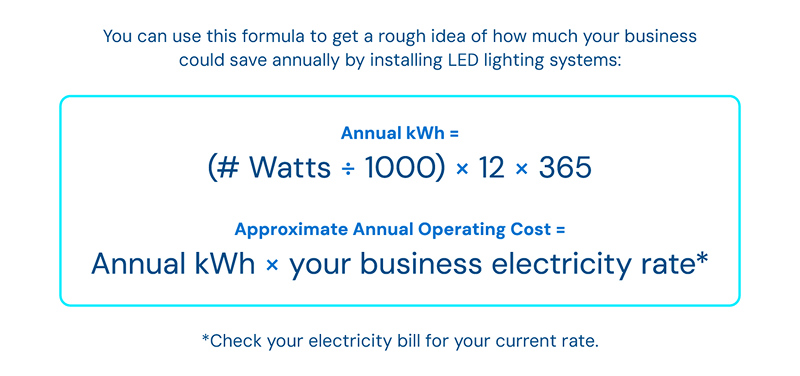
1. Improve focus and reduce fatigue.
Dim lighting can cause drowsiness and strain the eyes. On the other end of the spectrum, a well-lit space can reduce eye strain and fatigue, leading to a more focused and engaged workforce (HR Future). When task areas are well-lit, your employees may make fewer errors and complete visual tasks more quickly. Offices, workshops and retail floors all benefit when light levels are matched to the task — as an example, fine assembly or inspection areas need higher illuminance than a breakroom.2. LEDs may boost productivity.
LED lights often come equipped with features designed to adapt to the needs of your business. Dimmability options, color temperature flexibility and compatibility with smart lighting systems add to the appeal of LED lighting. Good lighting conditions and controls contribute to a more vibrant work environment, which can significantly boost employee morale and efficiency. Tasks are completed more accurately and quickly when employees are happy, comfortable and can see clearly, leading to higher quality work and increased productivity.
Sources: epa.gov; hrfuture.net; pecnw.com
3. Daylight and circadian-aware lighting improve wellness, sleep and alertness
Natural daylight synchronizes circadian rhythms — that’s your internal clock that regulates sleep, alertness and mood. Research shows that employees with good daylight exposure or LED lighting adjusted to the daylight spectrum report better sleep, higher alertness and improved well-being. Newer “circadian-effective” lighting systems provide blue-enriched daytime light and dimmer, warmer light in the evening that can extend those benefits indoors. It stands to reason that healthier, better-rested employees will be more engaged and productive. How much can you save? Calculate your potential savings from incentive-eligible energy upgrades from TVA EnergyRight Business and Industrial Team and your local power company.
4. Improved lighting may lead to a reduction in workplace accidents and injuries.
On shop floors, loading docks, kitchens and construction sites, inadequate lighting increases the risk of slips, trips and costly errors. Industry Today reports that “Poor visibility is the leading cause of slip, trip and fall hazards and contact with moving objects — some of the biggest risks in any facility. LED fixtures produce bright, white, uniform light that improves visibility, and helps workers spot hazards and stay out of harm’s way.”5. LED lighting can improve employee comfort.
Compared to incandescent bulbs, which release 90% of their energy as heat, and compact fluorescents, which release 80% of their energy as heat, LEDs emit very little heat energy. This efficiency enables better temperature control in workplaces, which can improve both comfort and safety for your team. Reducing heat waste fosters a more pleasant workspace and decreases the cost of air-conditioning. And finally, the reduced heat output may also contribute to a lower risk of overheating in electronic devices and other critical systems, thereby extending their lifespans and reliability.6. Brighten your customers’ experience with the LED lighting.
If productivity extends to customer experience (and we think that’s a pretty easy case to make), then it’s worth noting that LED lighting can actively shape how your customers feel the moment they walk through your business’s door. For some retailers, bright lighting makes products look sharper and more appealing. For others, softer tones can create an inviting, comfortable atmosphere that encourages guests to sit back, relax and enjoy the moment.How TVA EnergyRight and your local power company can help.
For more tips and free energy-saving items such as a smart thermostat, smart plug, weatherstripping and more, request a Smart Energy Starter Kit. Some businesses may even qualify for free LED tubes!
How to make HVAC and heat pump upgrades work harder for your bottom line.
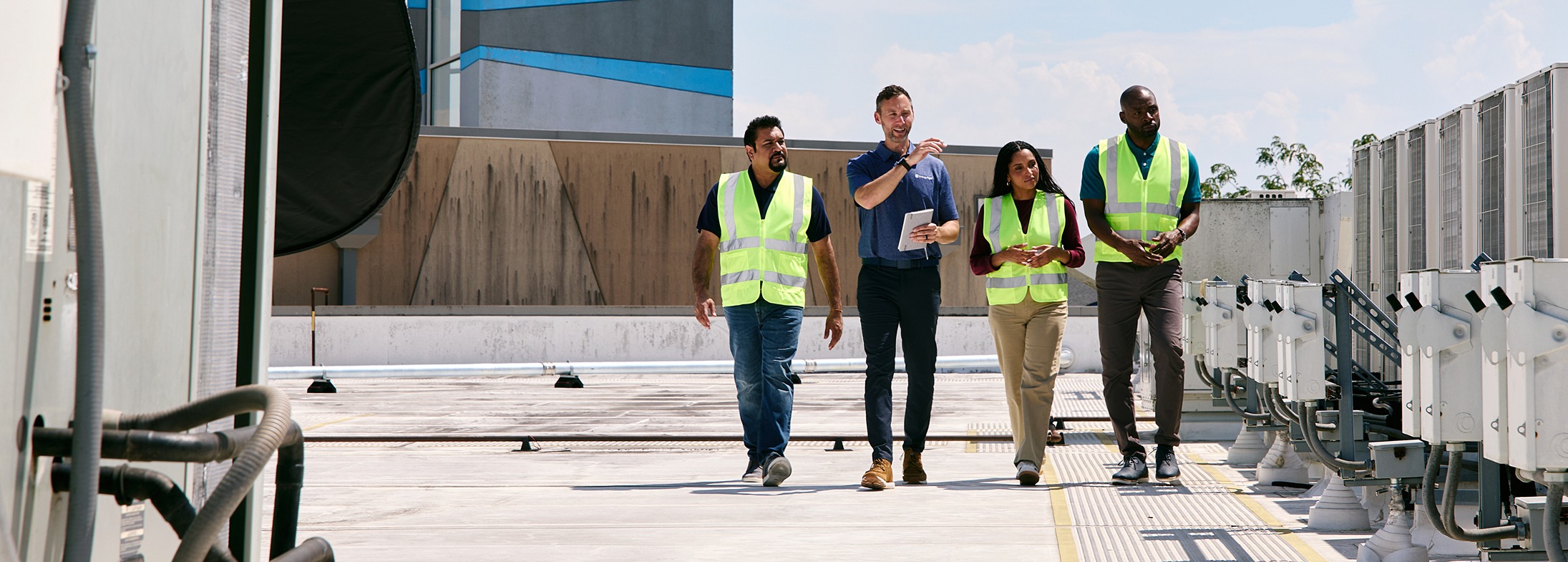
For small and medium-sized businesses, every operational decision needs to pull its weight. Upgrading your HVAC system or installing a high-efficiency heat pump isn’t just about keeping your employees comfortable (although that’s important, too!); it’s a strategic investment that can reduce operating costs, improve productivity and protect your business from rising energy expenses.
When designed, installed and operated correctly, modern HVAC and heat pump systems can become some of the most reliable contributors to your bottom line. Here’s how to make sure your upgrade works harder for your business, not just your building.
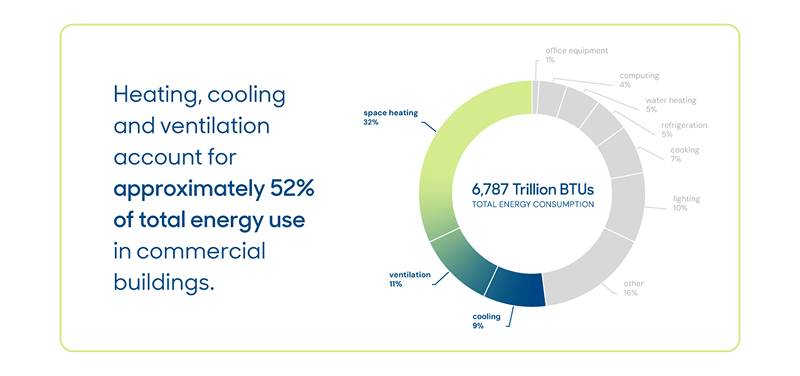
Source: U.S. Energy Information Administration
Start with your business’s needs, not the equipment.
Heating, cooling and ventilation account for over 50% of total energy use in commercial buildings. For many small to medium-sized businesses, inefficient HVAC systems quietly drain thousands of dollars each year through inefficiencies, wasted energy and frequent maintenance calls.

Here are 10 strategic, ROI-driven questions you can ask as you think about upgrading your HVAC system.
- What are my annual heating and cooling costs?
- How much do I spend on annual maintenance and repair?
- How often do breakdowns disrupt operations (and how much does that cost me)?
- How long do I plan to occupy the space?
- How old is my existing HVAC system?
- What is the installed cost vs. annual energy savings?
- Are hot or cold spots affecting productivity or customer experience?
- Are there incentives available to help offset the cost?
- Can zoning, smart thermostats or building controls reduce run time?
- What is the lifecycle cost over 10-15 years?
For many small and medium-sized businesses, a three-to-five-year payback is strong. Longer payback periods can still make sense if comfort and reliability gains are significant. And remember, HVAC incentives can dramatically reduce payback periods and improve ROI.

By framing HVAC upgrades as an operating expense reduction — not just a capital cost — you can evaluate options based on payback period, lifecycle cost and long-term savings.
If you lease your space, it may be worth having a conversation with your landlord about HVAC upgrades. Check out “How to talk to your landlord about energy upgrades” for a few conversation-starters and tips.
Pair equipment upgrades with supplemental energy efficiency measures.
Even the most efficient HVAC system can underperform if your building isn’t optimized for energy efficiency.
If you have access to your building ducts, make sure they’re well-sealed and insulated. Use caulk and weatherstripping to seal gaps around your building’s doors and windows. Consider installing LED lighting to reduce heat emissions and lower your air conditioning costs in the summer.
As you consider HVAC systems, you’ll also want to think about how smart thermostats, zoning controls and occupancy sensors may help ensure that energy isn’t wasted by conditioning empty spaces.
For more tips and free energy-saving items such as a smart thermostat, smart plug, weatherstripping and more, request a Smart Energy Starter Kit.

Choose high-efficiency HVAC technology.
Modern HVAC and heat pump systems are designed to deliver more output using less energy. As you consider your options, look at the SEER2 ratings. SEER stands for Seasonal Energy Efficiency Ratio, and the higher the SEER2 rating, the more efficient the system. Check out our SEER2 FAQs for more information.
Other important efficiency features to consider include:
Variable-speed technology
Unlike older single-speed systems that cycle on and off, variable-speed systems adjust output in real time. This means:
- Lower energy use during mild weather.
- More consistent indoor temperatures.
- Reduced wear and tear on components.
Heat pump technology
Heat pumps move heat inside during the winter and outside during the summer. Because heat pumps move heat rather than generate it, they can operate with significantly higher efficiency than conventional heating and cooling systems.
Unlike a conventional furnace, which generates heat by burning gas or oil, a heat pump extracts heat from the air, ground or water. Heat pumps provide both heating and cooling using electricity, making them especially effective in the TVA region. Benefits include:
- High efficiency in moderate climates (such as our seven-state Tennessee Valley region).
- Fewer carbon emissions.
- Lower maintenance needs compared to traditional systems.

Improve ROI with HVAC incentives.
One of the fastest ways to improve the financial performance of an HVAC or heat pump upgrade is by taking advantage of available incentives.
TVA EnergyRight and your local power company are offering incentives on unitary A/C units and heat pumps, air-cooled chillers, VRF heat pumps, dual fuel heat pumps and ground source heat pumps.
These incentives can significantly reduce up-front costs and shorten payback periods.
Before purchasing equipment, be sure to identify a qualified contractor familiar with TVA EnergyRight incentives to ensure that your project qualifies.
Take care of your investment.
Many modern HVAC systems offer built-in monitoring or integration with building management systems, allowing you to track performance and identify opportunities for optimization.
Consistent monitoring may also help prevent small issues from becoming costly breakdowns and contribute to keeping your energy costs predictable. Ask your contractor about annual maintenance and seasonal performance checks to keep your new investment operating at peak efficiency.
Factor in the unexpected benefits of an HVAC upgrade.
While energy savings are fundamental to your decision, comfort also has a direct impact on business performance and asset value.
Spaces that are too hot or too cold can lead to reduced employee productivity, increased complaints, more downtime and negative customer experiences. On the other hand, efficient HVAC systems maintain stable temperatures and promote better indoor air quality, creating a more comfortable environment for both employees and customers.
Over time, this can translate into higher productivity, better employee retention and stronger customer satisfaction. These benefits don’t always show up on an energy bill — but they absolutely affect your bottom line.
In addition to comfort and customer experience, HVAC upgrades can increase your property’s value, improve resale or lease value and contribute to a stronger asset balance sheet.
Plan now to avoid stress later.
Often we wait until our current HVAC system fails and then make a rushed decision to replace it. If your system is more than 10 years old, now is the time to plan ahead and decide what to buy. Run the numbers on a high efficiency system with your favorite experts and explore the incentives available. When failure occurs, you’ll be prepared to make a smart decision.
Keep the big picture in focus.
Upgrading your HVAC system can:
- Lower energy costs.
- Reduce maintenance and downtime.
- Improve comfort, productivity and customer experience.
- Strengthen your asset value.
- Enable you to take advantage of financial incentives that accelerate payback.
TVA EnergyRight for Business & Industry helps small and medium-sized businesses make smart energy decisions that reduce costs, improve performance and support long-term success.
When your HVAC works better, your business does, too.
Are your compressed air systems the hidden energy drain in your facility?
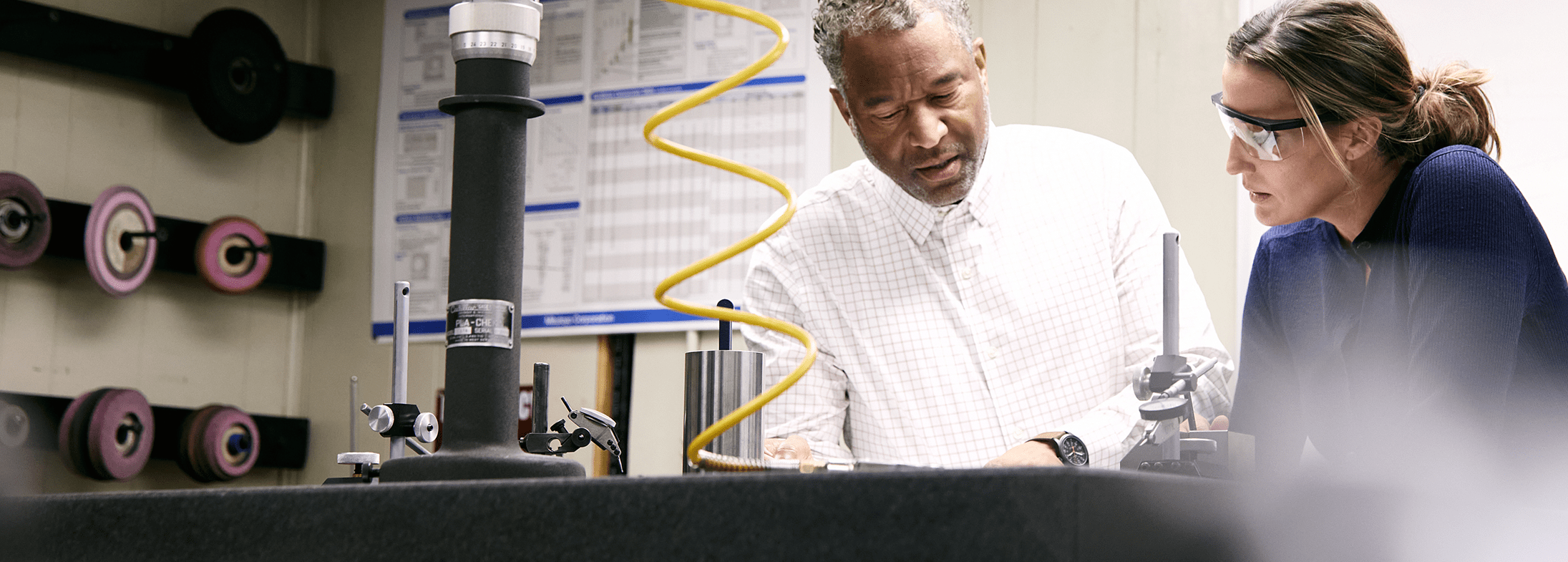
Compressed air is one of the most widely used utilities in industrial facilities — and one of the most expensive to operate. Because it operates quietly in the background, inefficiencies often go unnoticed until energy costs start to rise and equipment performance declines. For many facilities, aging compressed air systems are consuming more energy than necessary, creating an opportunity for smarter upgrades.
The good news: Modernizing compressed air systems for efficiency doesn’t have to mean over-the-top capital costs. With new Fast Track Compressed Air incentives, custom incentives and free online training, TVA EnergyRight® is helping industrial facilities address inefficiencies, plan upgrades strategically and improve long-term performance.
Why compressed air system efficiency deserves a closer look.
Compressed air plays a critical role in manufacturing, powering pneumatic tools, processing, packaging and material handling. But it’s also one of the least efficient forms of energy. Compressed air is an on-site-generated utility, and it is also one of the most expensive sources of energy in a plant. The overall efficiency of a typical compressed air system can be as low as 10%-15%.
Studies show that up to 30% of compressed air energy may be wasted in aging, improperly sized or poorly maintained systems. Because this waste accumulates gradually, it often goes unnoticed during day-to-day operations.
Even small issues can add up quickly. For example, a quarter-inch air leak operating at 100 psi can waste more than $2,500 in electricity each year. Across an industrial facility with multiple compressors and extensive piping, those losses can add up fast.
Unlike other utilities, compressed air inefficiencies don’t always present as a single failure. Instead, facilities may experience creeping energy costs, declining system responsiveness or increasing maintenance demands. That means that the system is working harder than it should, and that work consumes extra energy, costing you more.
Sources: energy.gov; gasoutlook.com; usaircompressor.com
The real cost of aging compressed air systems.
Many industrial facilities still operate compressed air systems installed years or even decades ago. While these systems may still function, their efficiency and performance often decline over time.
Challenges include:
- Increased energy consumption to deliver the same air output.
- Higher maintenance costs and unplanned downtime.
- Equipment running outside optimal load ranges.
- Running a system at a higher pressure than necessary.
- Difficulty justifying upgrades without clear financial support.
As production needs change, older systems are often left mismatched to current operations, resulting in excess energy use and reduced reliability.
Source: energy.gov
Where energy losses typically occur.
Compressed air energy efficiency isn’t limited to one component. Instead, it’s usually the result of a combination of system-level issues, including:
- Outdated compressors operating inefficiently under partial or excessive loads.
- Inefficient air treatment and filtration, increasing pressure drop and energy demand.
- Poor system controls or sequencing, leading to unnecessary run time.
- Equipment sized for past production needs, not today’s operating reality.

Addressing these efficiency issues requires more than maintenance. It often requires strategic system upgrades. And that’s where industrial energy incentives with TVA EnergyRight and your local power company come in. Here are three tools you can use to upgrade your compressed air system’s energy efficiency.
Source: energy.gov
Smarter compressed air starts here.
1. Fast Track Compressed Air incentives: A smarter path to upgrades.
To help facilities move forward with necessary improvements, TVA EnergyRight offers Fast Track Compressed Air incentives designed to reduce the up-front cost of new equipment and specific parts replacements, such as condensate drains and engineered air nozzles.
These incentives:
- Lower costs for compressed air component upgrades.
- Simplify the incentive process to speed up upgrades.
- Support improvements that enhance efficiency, reliability and performance.
Fast Track Compressed Air incentives help turn required upgrades into smarter business moves with a clearer ROI.
Learn more about our Fast Track Compressed Air incentives and see how you can start saving.
2. Custom incentives for full system replacements.
There is a lot of flexibility with custom incentives. For targeted improvements with existing compressed air systems to full replacements, custom incentives provide flexible support based on project scope and energy savings.
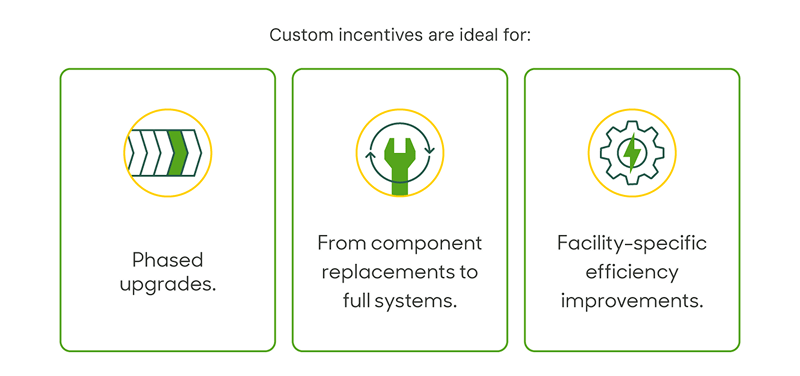
This approach allows facilities to modernize strategically — aligning improvements with operational needs and capital planning timelines.
To learn more about custom incentives, connect with a TVA Energy Expert.
3. Build in-house expertise with Compressed Air Training
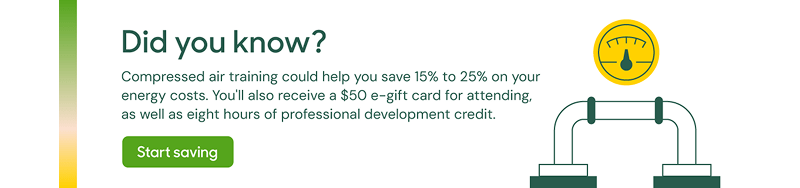
Incentives are most effective when paired with knowledge. The first step for any compressed air system is to optimize existing equipment. That’s why TVA EnergyRight offers a free online Compressed Air Training course with two 4-hour sessions, valued at more than $400.
The course is designed for facility managers, engineers and energy professionals. It focuses on:
- Practical strategies that can be implemented immediately.
- Understanding system performance and optimization.
- Identifying opportunities for ongoing energy savings.
Facilities that apply these strategies typically save 15%-25% on annual energy costs, making training a powerful resource alongside system upgrades.
Learn more or register for our Compressed Air Training webinar here.
From cost center to competitive advantage.
TVA Energy Experts can help your facility navigate this process by providing proven pathways that support smarter planning, stronger performance and long-term results.
When compressed air systems are modernized and well managed, they do more than just reduce energy costs. They support productivity, improve reliability and give facilities greater control over operating expenses. With the right mix of incentives, training and expert guidance, compressed air can shift from a hidden cost to a strategic asset.
Ready to start? Here’s how.
Optimizing compressed air systems can cut energy use, lower operating costs and boost efficiency. Connect with a TVA Energy Expert to see how we can help your facility cut costs and save more.