
What’s a dual fuel heat pump?

When the weather can’t commit, your heat pump can.
Here in the Tennessee Valley region, we’re all quite familiar with weeks that keep you on your toes temperature-wise. You know, those weeks when Mondays have you ramping up the air conditioning and Wednesday has you firing up the heat. Don’t even get us started on those tricky Tuesdays when you need a little of both!
If you’ve ever adjusted your thermostat more than once in a single day — or you routinely thank your lucky stars that you have a smart thermostat — you’re not alone. The good news is that today’s heating and cooling technology is built to handle exactly this kind of weather.
Some of the most flexible and efficient options available to people in our region are heat pumps. In this post, we’ll take a look at dual fuel heat pumps, specifically. These systems may also be called hybrid heat pump furnaces or dual fuel HVAC systems.
These popular heat pumps combine two proven technologies into one integrated system — with an indoor furnace and an outdoor unit — designed to keep your home comfortable, no matter what the forecast looks like.
Let’s walk through what a dual fuel heat pump is, how it works and why so many homeowners are choosing this system for their home.
What is a dual fuel heat pump system?
At its simplest, a dual fuel heating system pairs an electric heat pump with a gas (or propane) furnace. Together, they create a heat pump with gas backup that automatically switches between the most efficient energy source based on outdoor conditions.
You don’t have to flip switches. You don’t have to monitor temperatures. The system seamlessly does the decision-making for you.
How does a heat pump work?
A heat pump doesn’t “make” heat by burning fuel like an old-school furnace. Instead, it moves heat from one place to another. And guess what? You almost certainly already have one in your home! Refrigerators work on heat pump technology: They don’t create cold air; they remove heat from inside the fridge and release it into your kitchen.
Side note: That’s why it’s a good idea to keep a gap between your fridge and the wall to encourage adequate air circulation. (Visit our tips and advice page for more easy energy-saving ideas.)
Instead of keeping your fruits and veggies fresh, a heat pump keeps your home at a cozy temperature. In summer, it moves heat from inside your house to the outdoors, cooling your space. In winter, it pulls heat from outdoor air and moves it inside.
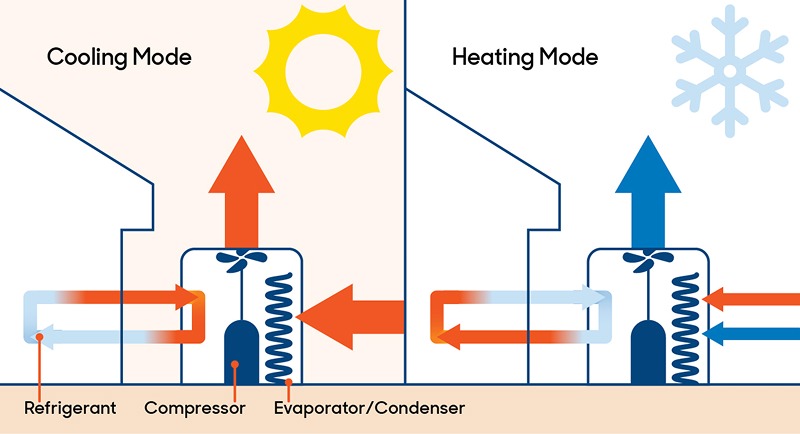
Believe it or not, even when it feels chilly outside, there’s still usable heat energy in the air. Modern heat pumps are designed to capture and transfer that energy efficiently.
Where the “dual fuel” part comes in.
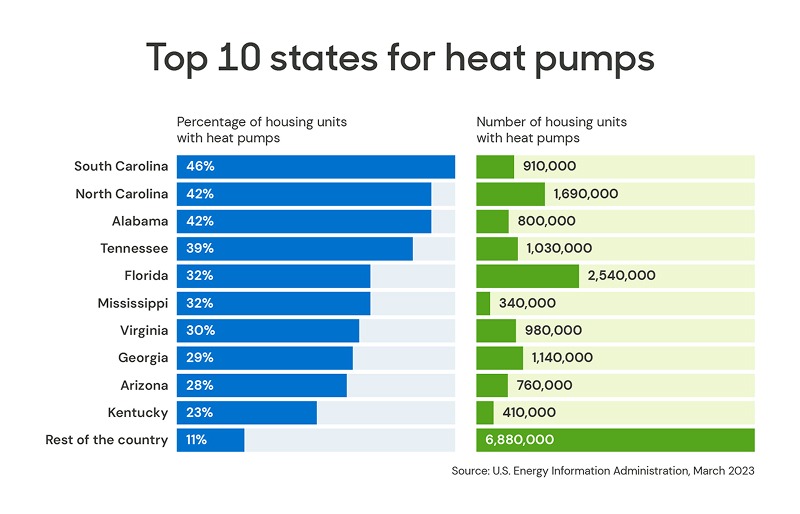
Heat pumps are incredibly efficient in mild and moderately cold temperatures — which is what our seven-state region usually enjoys. However, when outdoor temperatures drop … and then drop some more as they did during the 2026 ice storm, a gas-powered back-up furnace can heat more quickly and powerfully.
Here’s how it typically works: On mild or cool days, the heat pump provides warmth using electricity. When temperatures fall below a certain point, the system automatically switches to the gas furnace.
You always get the most efficient and effective heating option — without having to think about it.
One energy efficient system that heats and cools.
Are you ready for the best part? If you already have both an AC and gas furnace, you can consolidate with a dual fuel heat pump that takes care of both heating and cooling! That means one system, one set of controls and a coordinated, efficient approach to heating and cooling your home.
If your HVAC equipment is more than 10 years old or struggles to keep you and your family comfortable, it may be time to consider replacing it. For homeowners with aging equipment, upgrading to a dual fuel HVAC system can simplify maintenance and improve performance. A professional evaluation can help determine what makes the most sense for your home’s size, layout and comfort needs.
For more information about heating and cooling systems, we encourage you to reach out to a TVA-vetted member of the Quality Contractor Network. They’ll assess your home and your family’s needs and make a recommendation that fits your lifestyle.

Designed for consistent indoor temperatures.
Older heating and cooling systems often operate in an “all or nothing” way. They turn on at full power, then shut off, then turn on again.
This can lead to:
- Hot and cold spots throughout your home.
- Noticeable temperature swings.
- Frequent thermostat changes.
Many modern heat pumps use variable-speed technology, which allows them to run at different levels instead of just full blast.
That means:
- More even temperatures throughout your home.
- Fewer sudden bursts of hot or cold air.
- Less wear-and-tear on your equipment.
The result is a steadier, more comfortable indoor environment — especially during those shoulder seasons when days are warm and nights are cool. And when tricky Tuesdays are both.
Why a dual fuel heat pump is an energy-efficient choice.
In addition to the convenience of an all-in-one heating and AC system and the peace of mind that a gas-powered furnace provides, energy efficiency is one of the biggest reasons homeowners explore dual fuel systems.
Here’s what makes them so efficient:
- They move heat instead of generating it. Moving heat requires less energy than creating it. Because heat pumps transfer existing heat, they can deliver more comfort using less electricity.
- They use electricity during milder weather. When outdoor temperatures are moderate, the electric heat pump handles most of the heating using electricity, which is typically more efficient than burning fuel.
- They switch to gas only when needed. The gas furnace runs when it’s most helpful — during very cold conditions — so you’re not using fuel when a more efficient option will do.
- They avoid wasted energy. Variable-speed operation and smart controls help prevent the constant on/off cycling that wastes energy in older systems.
Over time, this efficiency can lead to lower energy bills, reduced energy waste and a better long-term value.
Rarely uses fossil fuels.
Today’s heat pumps are far more capable than earlier generations. They’re built to perform in colder temperatures and changing conditions. No matter what the weather brings, your system is ready.
Because the heat pump handles heating during milder conditions, your dual fuel heat pump-equipped home will rely less on gas or propane than a conventional furnace.
That means:
- More stable energy usage.
- More predictable utility bills.
- Less dependence on fuel deliveries.
The dual fuel approach offers a practical middle ground for homeowners who want efficiency and reliability.
What’s next?
You don’t have to become an HVAC expert to take the next step.
- Check your system’s age.
- Look into rebates and incentives.
- Schedule an energy assessment or HVAC evaluation with a member of the Quality Contractor Network.
- Ask them about dual fuel or hybrid heat pump options.
- Don’t forget to ask your contractor to submit your rebate application on your behalf.
Comfort that cooperates, even when the weather won’t.
A dual fuel heat pump gives your home the flexibility to handle warm afternoons, cool evenings and everything in between — without constant adjustments or guesswork.
It’s a smart, steady approach to comfort that helps homeowners feel confident about their choices and capable of taking the next step.
To learn more about dual fuel heat pumps, available rebates and home energy upgrade options, visit EnergyRight.com and explore what’s possible for your home.
Related stories
-
 Residential
Your home energy efficiency playbook.
View moreWhether you’re a renter, homeowner or landlord who’s considering upgrading aging systems, understanding the fundamentals of home energy efficiency is important. We’re working closely with local power companies throughout the seven-state Tennessee Valley region to help people like you lower your energy bills with energy-saving recommendations, rebates and more.
-
 Residential
Can air sealing and duct system maintenance save you money?
View moreIt sure can! As with most things, the better you take care of it, the longer it will last. Cars need to have their oil changed for reliability, air filters need to be replaced to improve air quality, and your home needs air sealing and duct system maintenance for optimal energy efficiency. That’s not only […]
-
 Residential
Fun science for kids: It’s not the heat, it’s the humidity!
View moreEver step outside on a hot day and feel it right away? If your skin feels sticky and your hair starts to frizz before you’ve even left the porch, it’s probably humidity. So what is humidity? It’s the invisible water vapor (it’s a little like fog that you can’t see) floating in the air all […]